Building Automation Training
Modern buildings are increasingly focusing on occupant well-being, recognizing the link between a comfortable environment and occupant satisfaction, productivity, and overall health. Building Automation Systems (BAS) play a crucial role in achieving this goal, offering a range of features that...
Building Automation Systems (BAS) play a crucial role in optimizing energy consumption within buildings. However, BAS can extend their reach beyond individual buildings and contribute to the stability and efficiency of the entire power grid. This is achieved through Demand Response (DR) programs,...
Arc Flash Training
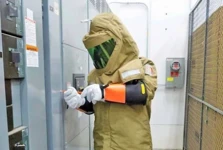
Arc flash safety is traditionally associated with industrial and manufacturing settings, but the risks and implications extend far beyond these environments. Innovations in arc-resistant equipment are now enhancing safety in sectors like healthcare and information technology, particularly in data...
Personal Protective Equipment (PPE) audits and inspections are vital components of a comprehensive safety program, particularly in environments with arc flash hazards. These checks go beyond ensuring that PPE meets regulatory compliance; they play a crucial role in maintaining the integrity and...
Power Quality Training
Correcting the misconceptions of ground testing BY JEFF JOWETT, Megger Ground resistance testing is sometimes described as an “art”, and indeed something can be said for that description. Familiarity with the basic issues and common problems, however, can take much of the “art” out of it...
How resistance testing is affected by the elements BY JEFF JOWETT, Megger Ground resistance testing is affected by the weather as much as any common electrical test—and sometimes even more so. Both the instrument and the test item are affected. With ground resistance testing, the test item is not...