
Electricity Forum Electricity Today Magazine Arc Flash Training

News and Trends

Latest News From The Industry

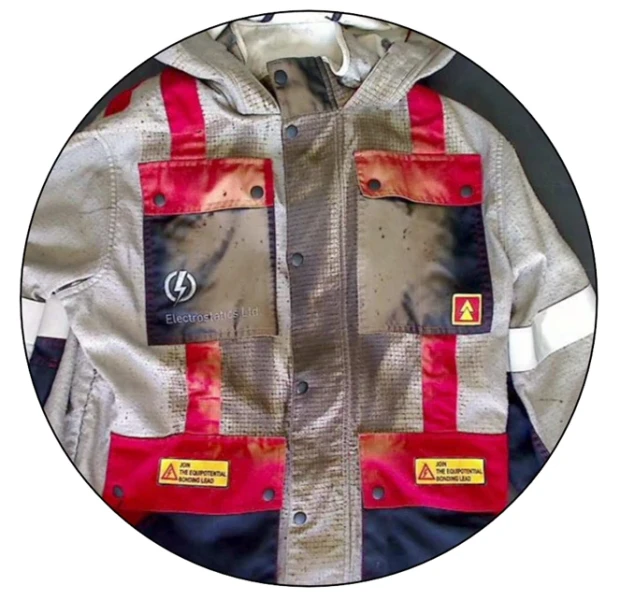
NOMEX protective garment

Advanced protection against electromagnetic exposures and electric arc

HAZARDS AROUND

While working live in the energized grid, presence of voltage around the workers requires special attention. However, live-line (live working) techniques are widely applied for decades, several accidents in the past prove that the level of safety must be improved to minimize the number and seriousness of injuries in the future.
In the high voltage grid, bare-hand method is a common technique for safe live work. In the surroundings of any energized equipment,...


Buyer's Guide


News & Trends


Counterfeiting Kills

Each year, the counterfeiting of well-known brands and products continues to rise, creating an even more threatening problem. Such well-known counterfeited brands, including consumer safety and critical electrical products, are estimated to be five to seven percent of world trade. The International...

Introducing Intelligent Power Today

Welcome to Intelligent Power Today Magazine, our publication that explores and explains the who, what, where, when, why and how of intelligent electrical devices, a collection of complex mechanical devices and sophisticated control systems used in industrial, commercial, and institutional...

Electrical Safety

Safety Footwear

When it comes to on-the-job safety, footwear serves as the
main point of contact between workers and their environment.
Because of the key role safety boots play in personal protective equipment (PPE), it is important to consider the various safety, performance, and comfort features as they relate to your job, work environment, and personal fitting requirements.

In safety footwear, there are a few key specifications that electrical workers need to consider. Generally speaking, the environments that this industry works in require a safety toe designed to protect against the impact of heavy objects falling onto, or rolling over the toes...

Arc Flash Analysis in DC Power Systems

Advanced approaches to addressing direct-current arcing faults

BY MICHAEL FURTAK & LEW SILECKY, Mersen

Let’s face it: there is not very much information available about direct current (DC) arc flashes. And, if you have searched in vain, well hopefully this feature will give you some insight into arc flash with relevance to DC circuits. Essentially, we want customers to be armed with information so that they can accurately determine the necessary level of protection required when working around these circuits.

In this feature, direct-current arcing fault incident energy calculations are presented to assess the level of risk involved when working...

Popular Electrical Safety Articles


How to Improve Electrical Safety

Avoid hazards with these suggestions BY ROB PROSSER & DANIELLE GALLO, Brady With an increase in accidents and injuries occurring in a variety of industries, employers are looking for ways to reduce hazards and improve safety within their facilities. Even with a plethora of information available...

Workers & Safety Garments

It may seem like all flame-resistant (FR) garments are the same. After all, government regulations demand that every FR fabric protects workers to a certain degree. However, the real issue isn’t protection. The issue is compliance. For your workers to be compliant, protection and comfort must go...
Electrical Safety Tools

Guide to Arc Flash Apps

Arc flash applications are increasing in popularity among engineers and electricians when examining hazards presented by an arc flash. Professionals search for accessible tools to help reduce dangers associated with arc flash as well as to assist in selecting adequate personal protective equipment...

IEEE Method Vs. the NFPA 70E Tables

IEEE Method Vs. the NFPA 70E Tables: Evaluating arc flash analysis methods BY REZA TAJALI, Schneider Electric Recent changes in workplace safety regulations have heightened the awareness of hazards associated with electrical arcs. The hazard level must be quantified and workers properly protected...